Pasta with Guanciale and Pecorino
Pasta alla Gricia is one of the four pillars of Roman cuisine and the ancestor of amatriciana, born in the village of Grisciano in the Lazio Apennines. It is a study in restraint: only guanciale, Pecorino Romano, black pepper and starchy pasta water, emulsified into a glossy cream that clings to each rigatone. No oil, no garlic, no onion, no tomato. The magic is technique — rendering the guanciale until crisp, then taming the heat so the pecorino melts into silk rather than seizing into clumps.
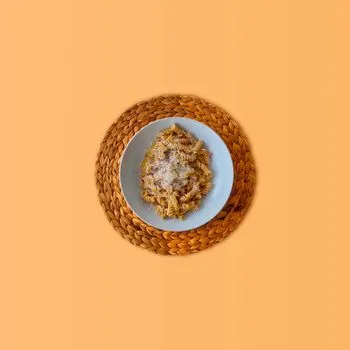
- prep 10 min
- cook 20 min
- total 30 min
- serves 4
- easy
- Italy
Ingredients
- 320 g Rigatoni
- 150 g Guanciale
- 80 g Pecorino romano
- 1 tsp Black pepper
- 1 pinch Salt
Steps
- Bring a large pot of water to a boil and salt it lightly — the guanciale and pecorino are already salty, so use about half the salt you normally would.
- Remove the rind from the guanciale and cut it into thick strips or batons about 1 cm wide.
- Place it in a cold dry skillet with no oil and set over medium-low heat, letting the fat render slowly for 5 to 6 minutes until the strips are golden and crisp at the edges but still tender inside.
- Lift the crisped guanciale out with a slotted spoon and set aside, leaving the rendered fat in the pan.
- Pour off and reserve a little fat if there is an excess, keeping about two tablespoons in the skillet.
- Cook the rigatoni in the boiling water until very al dente, draining it two minutes before the package time so it can finish in the sauce.
- Before draining, ladle out a generous cup of the starchy cooking water.
- Add a ladle of the hot pasta water to the guanciale fat in the skillet and swirl over low heat to loosen it into a base.
- Drain the pasta and tip it into the pan.
- Toss the pasta over low heat for a minute, adding splashes of pasta water, so the starch and fat begin to emulsify and coat every piece.
- Take the pan off the heat and let it cool for thirty seconds.
- Add most of the grated pecorino and a generous grind of black pepper, stirring vigorously and adding hot pasta water a little at a time until a glossy, clinging cream forms.
- Return the crisp guanciale to the pan and toss once more.
- Serve immediately, finishing each plate with the remaining pecorino and a final grinding of black pepper.
Tips
- The single biggest mistake is adding the pecorino over direct heat — it will clump into a stringy mass. Always pull the pan off the flame and let it cool slightly first, then add cheese with a splash of hot water and stir fast. Use genuine guanciale (cured pork cheek), not pancetta, and never add oil: the rendered guanciale fat is the only fat the dish needs. Pasta water is your sauce-maker, so keep it starchy and don't over-salt the pot.
≈ 590 kcal · 22 g protein · 62 g carbs · 28 g fat — per serving, estimate